

Lobby & Slate Cafe
In the middle of Taipei’s fast-paced city life, the United Hotel Taipei, located right across from the Taipei Dome, offers a space where people can slow down. The design focuses on openness and flexibility, creating an environment that shifts throughout the day and responds to different ways people use the space.
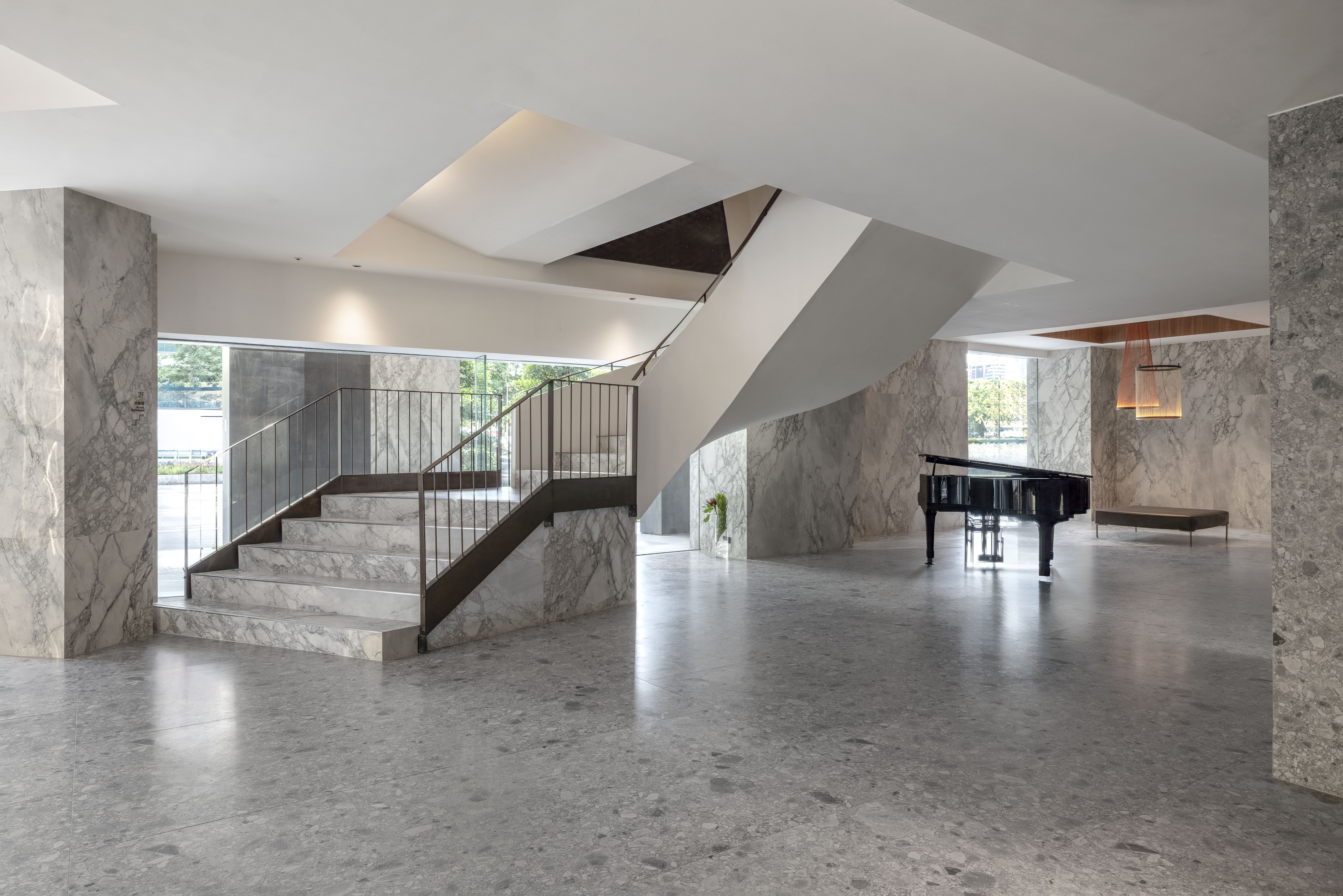
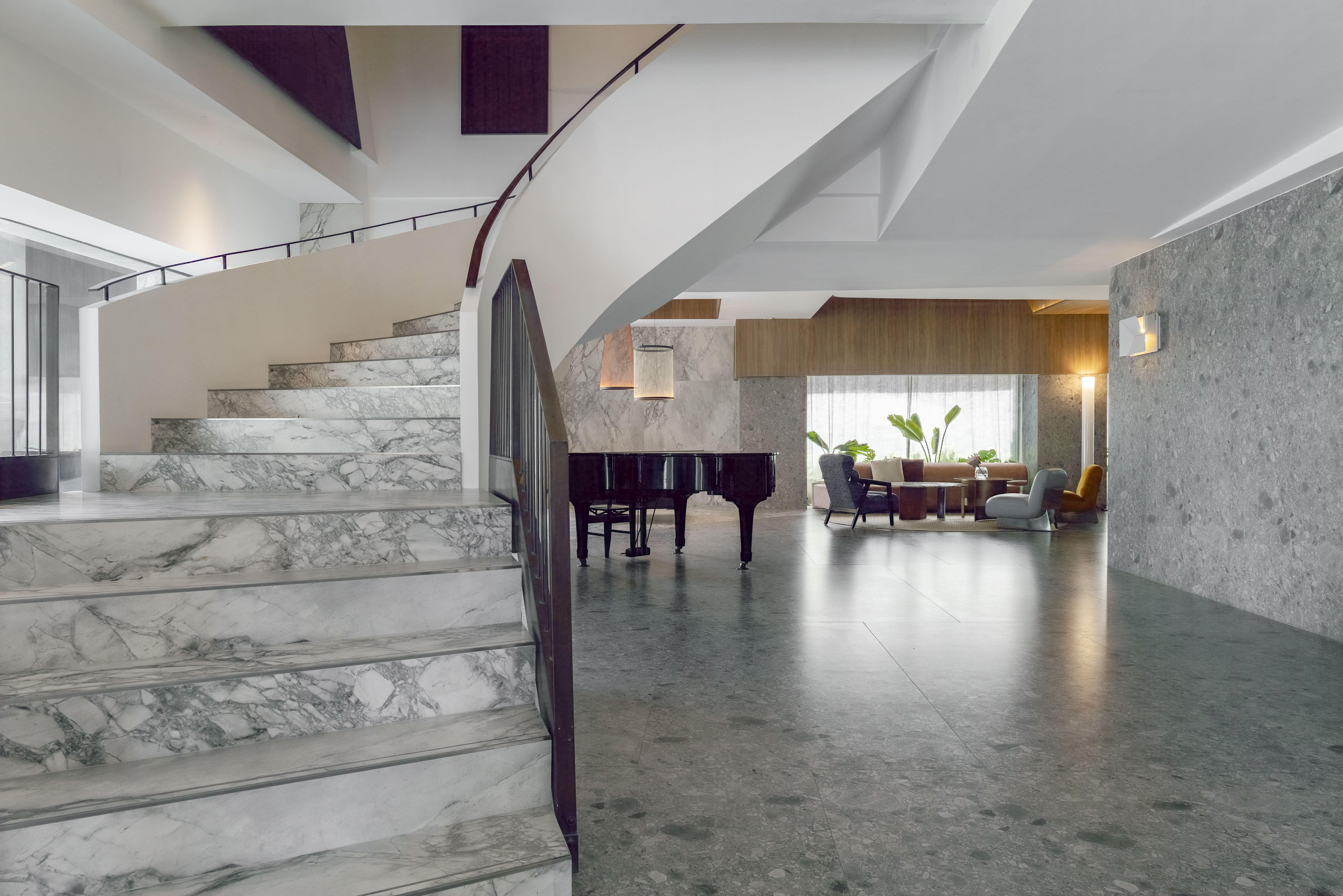
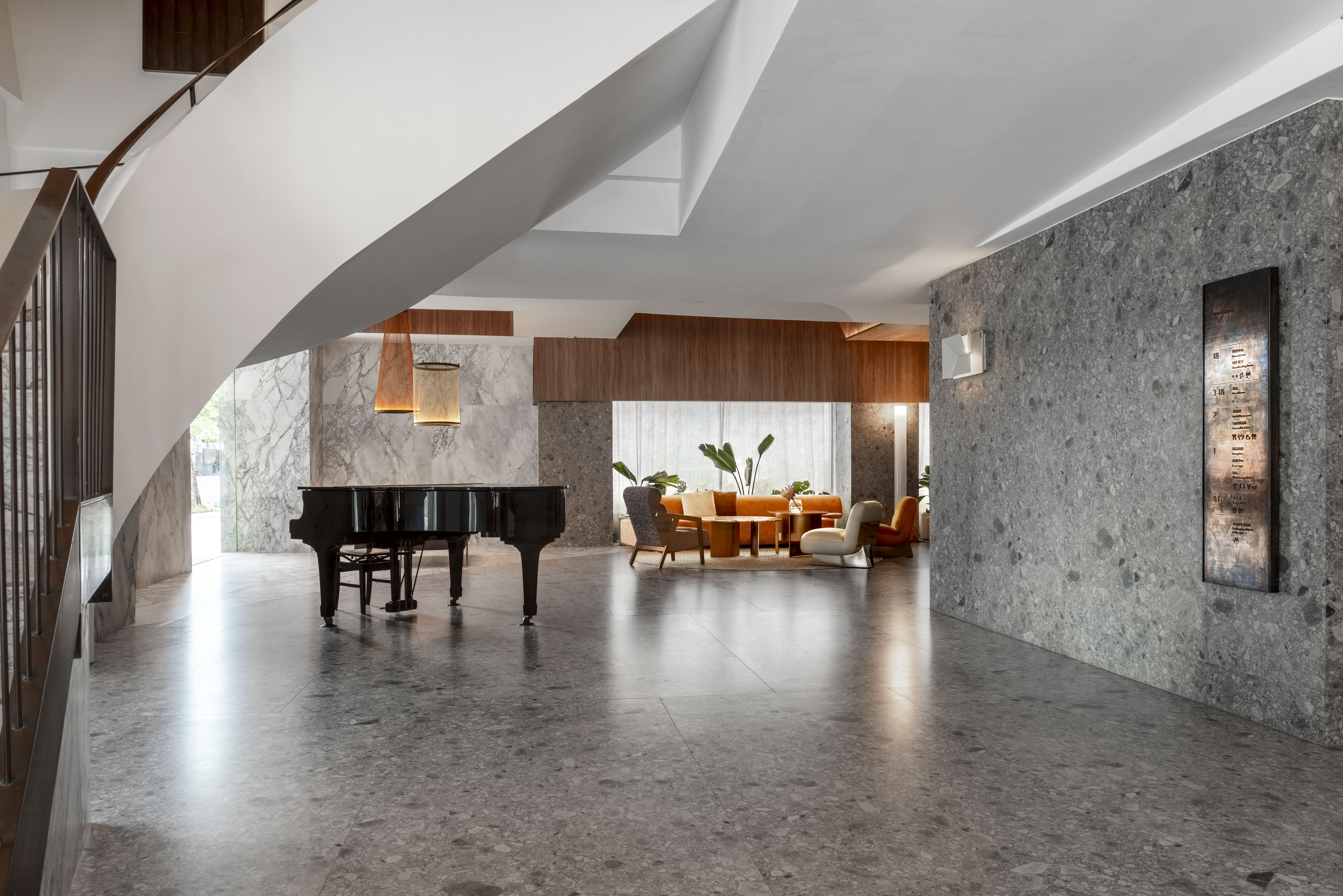
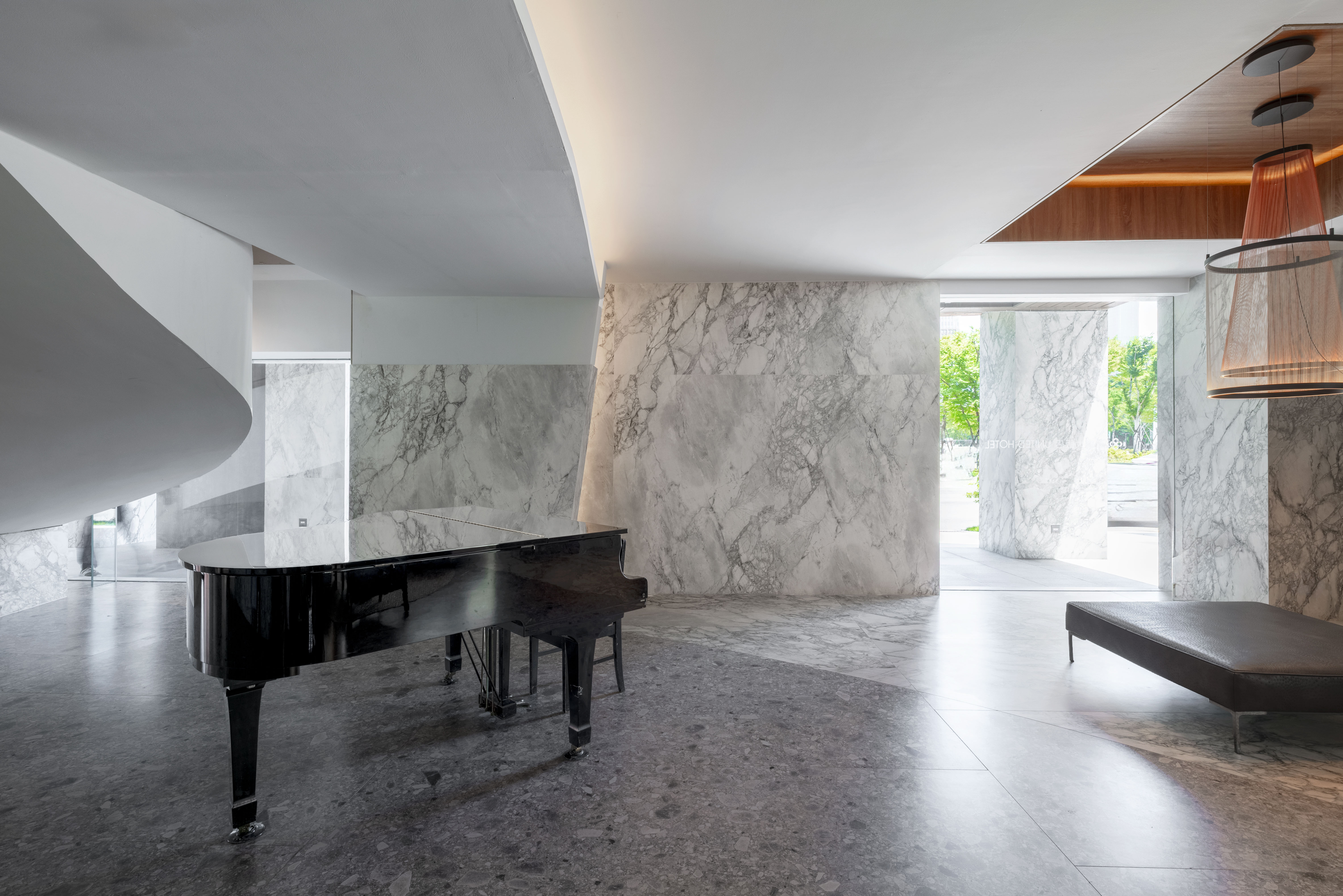
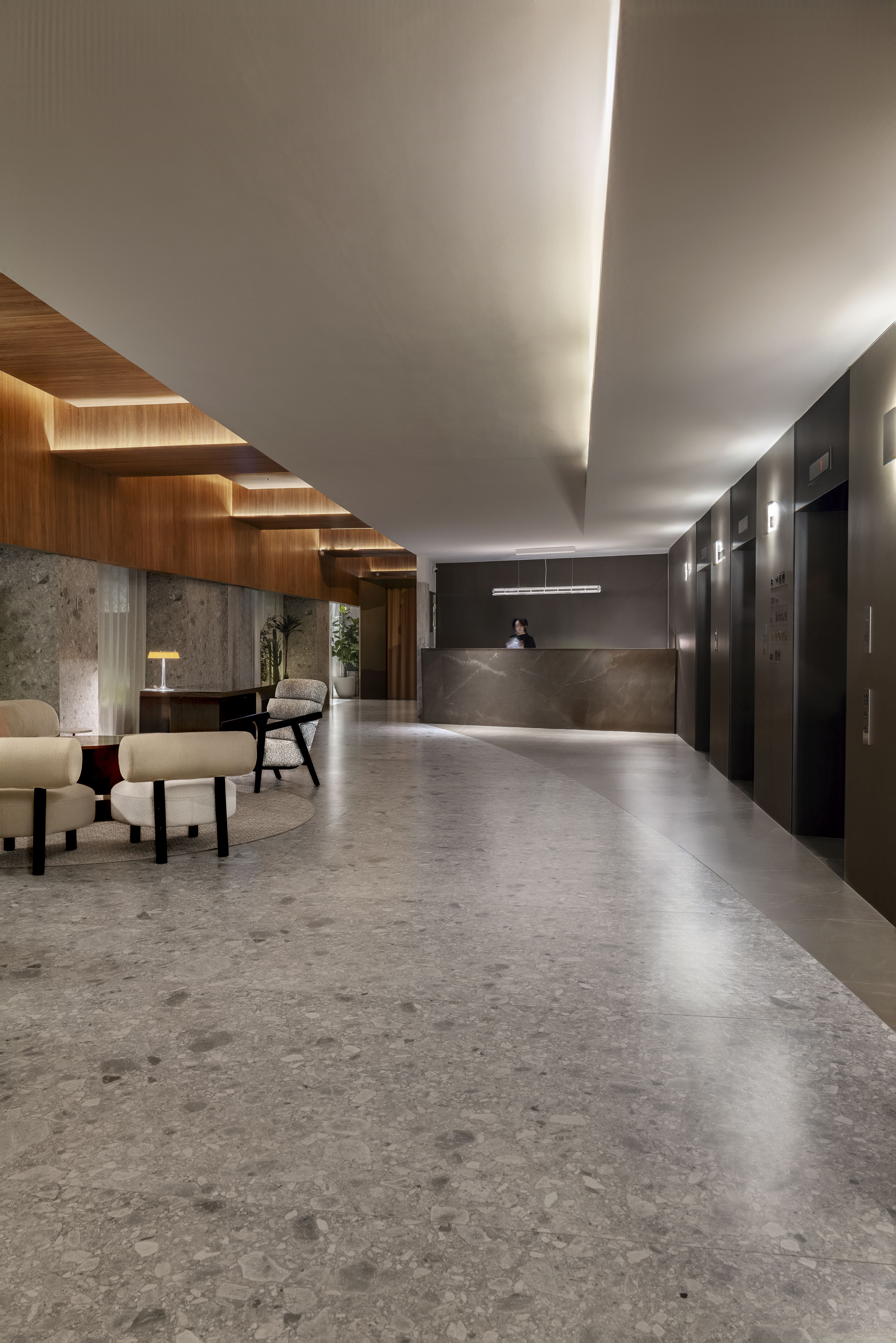
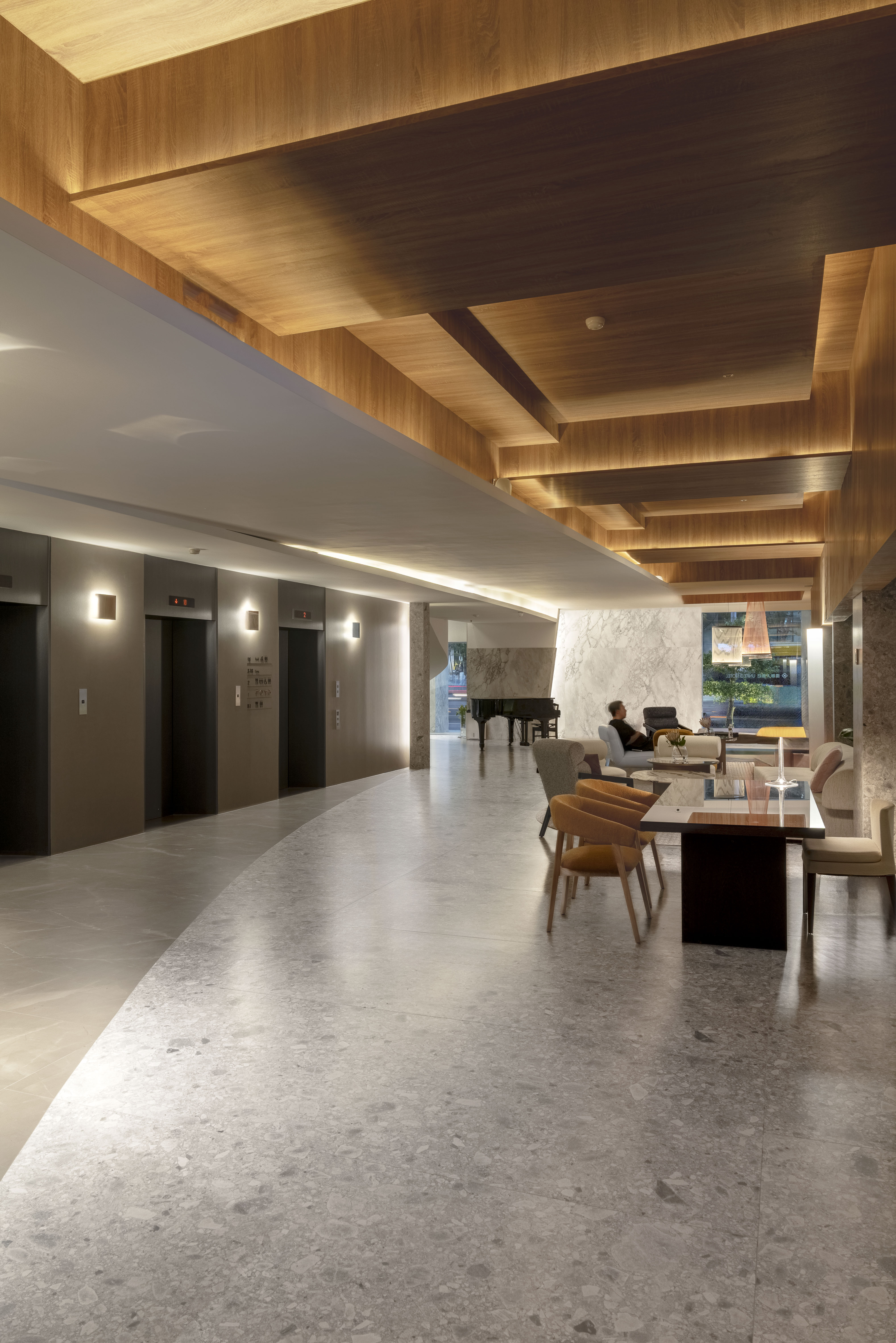
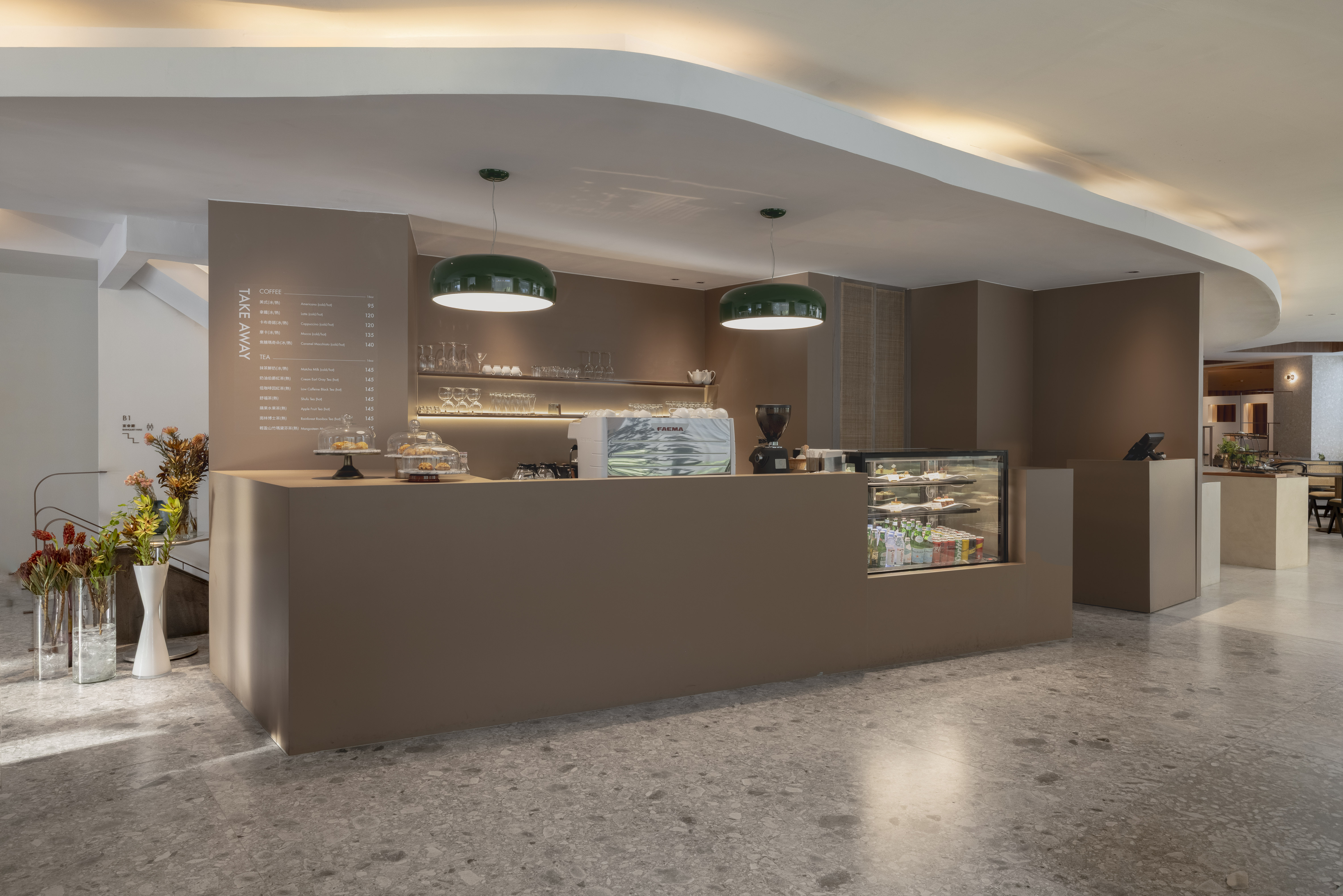
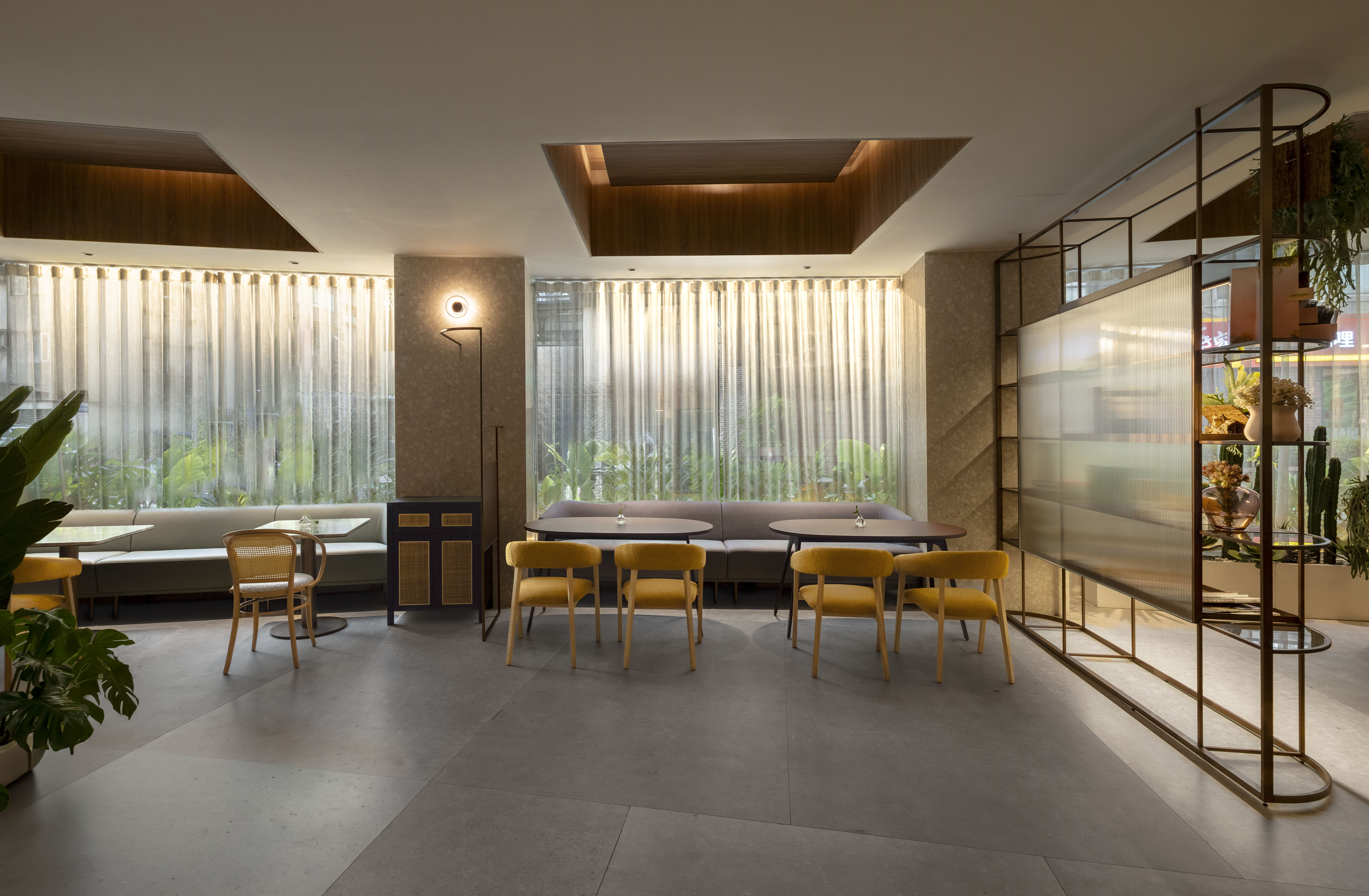
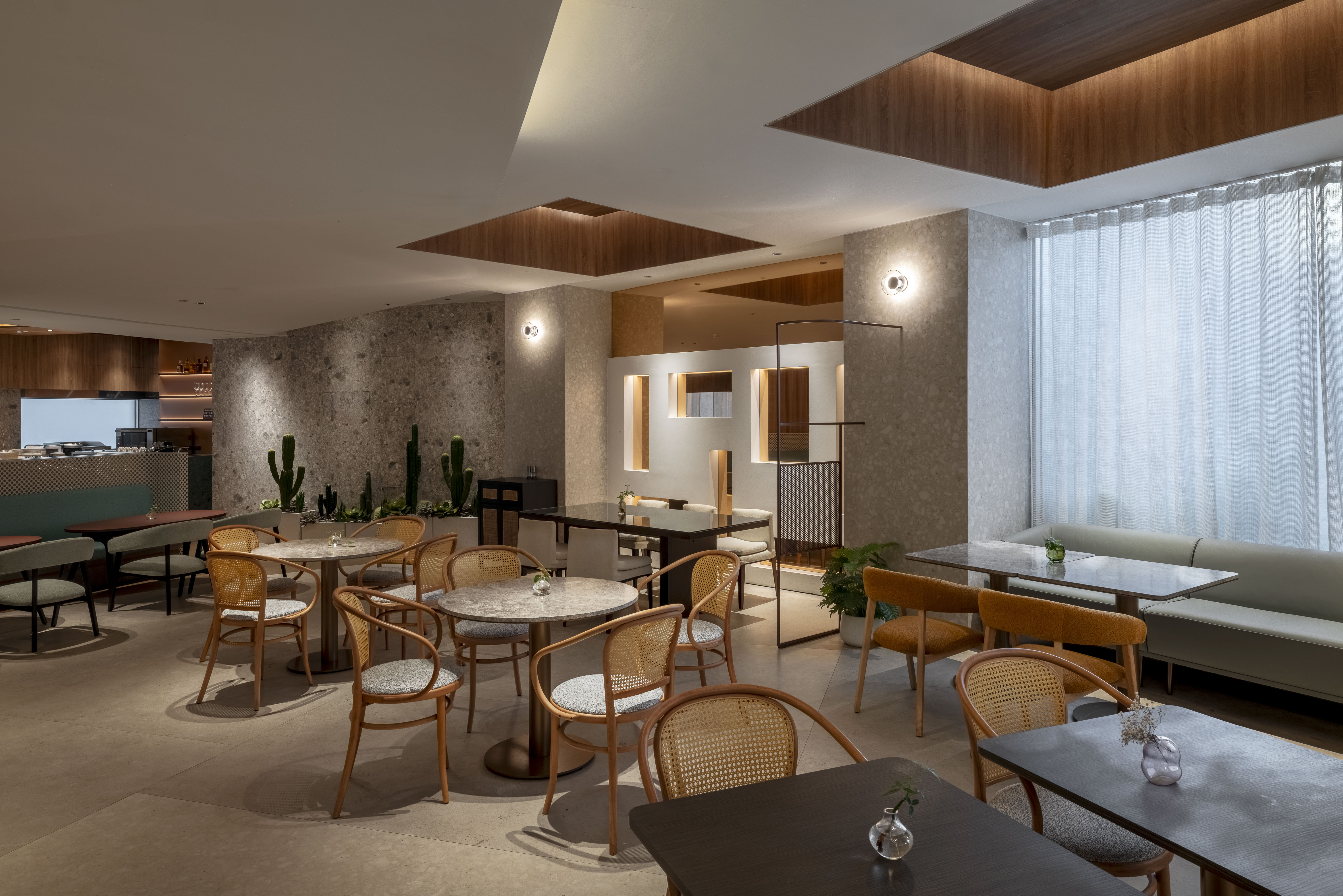
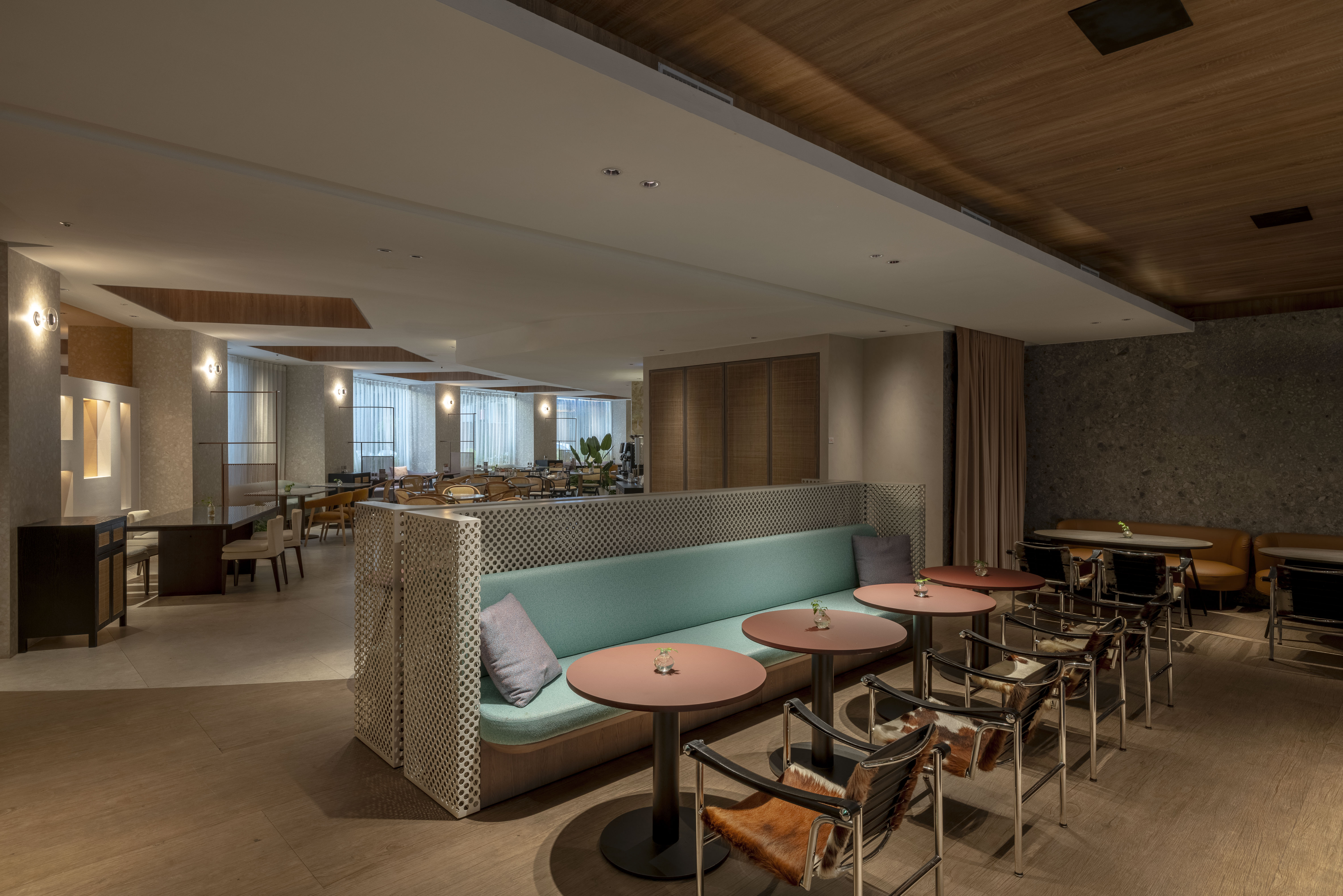
The renovated ground floor is organized around a circular layout that breaks away from traditional spatial boundaries, creating a flexible, multifunctional social hub. Upon entering, the left side leads to an entrance hall featuring a sculptural spiral staircase that leads to the second floor restaurant, and continues into the reception lobby and front desk. On the right, Slate Café brings café, buffet, and bar, all seamlessly connected to the main lobby. This open-plan approach allows the space to adapt throughout the day—from breakfast in the morning, to coffee in the afternoon, and drinks in the evening—offering a variety of spatial experiences to suit different needs.
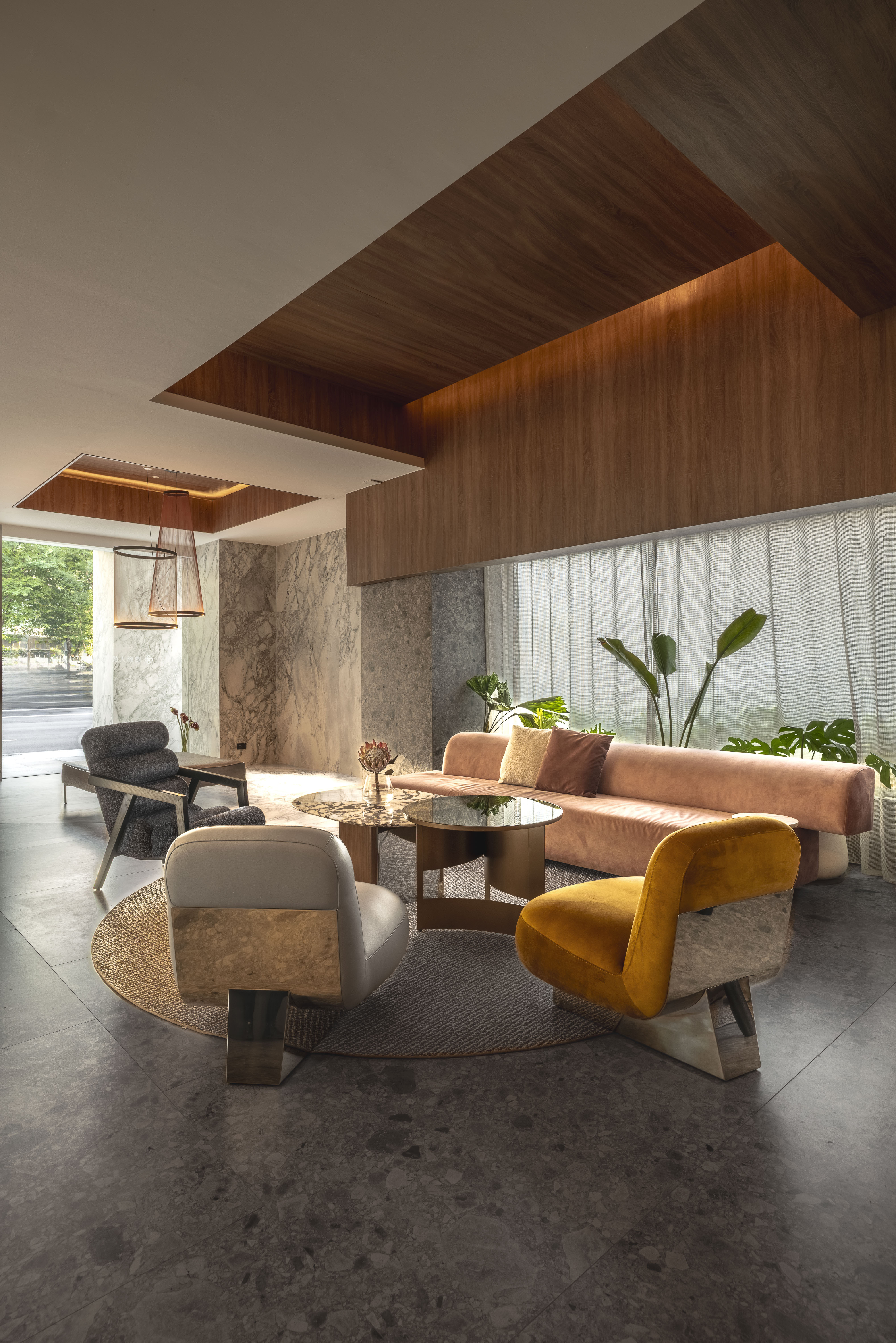
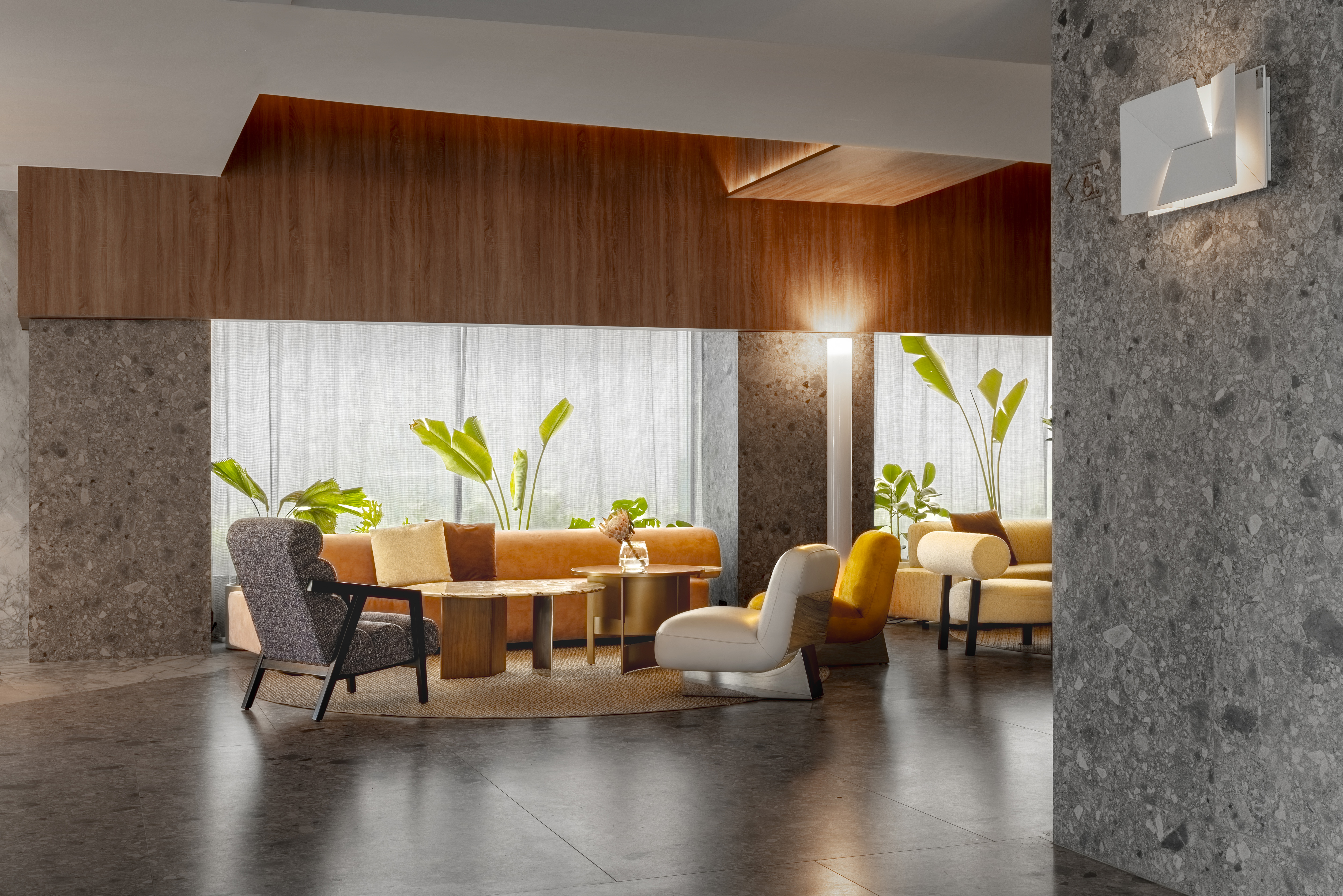
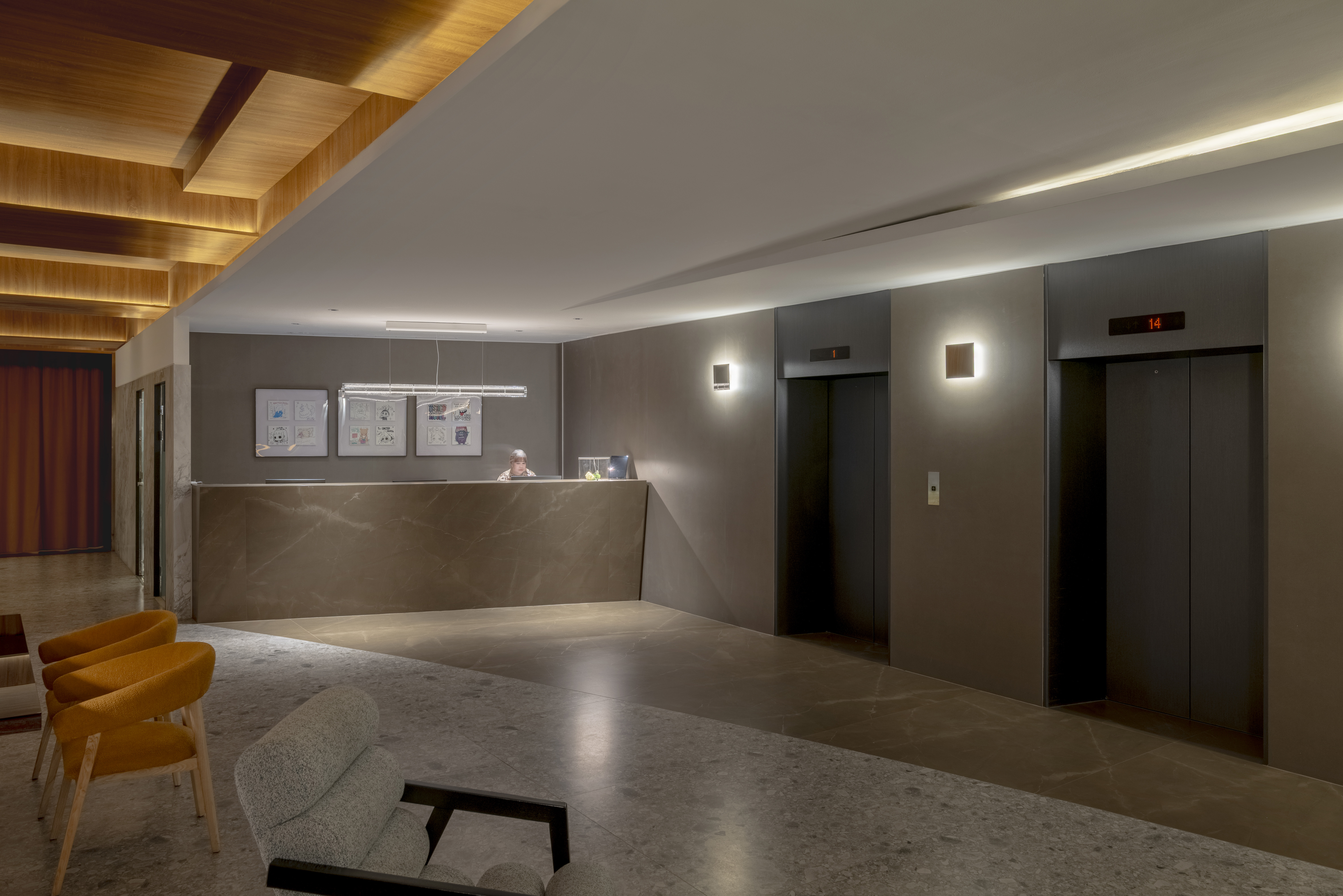
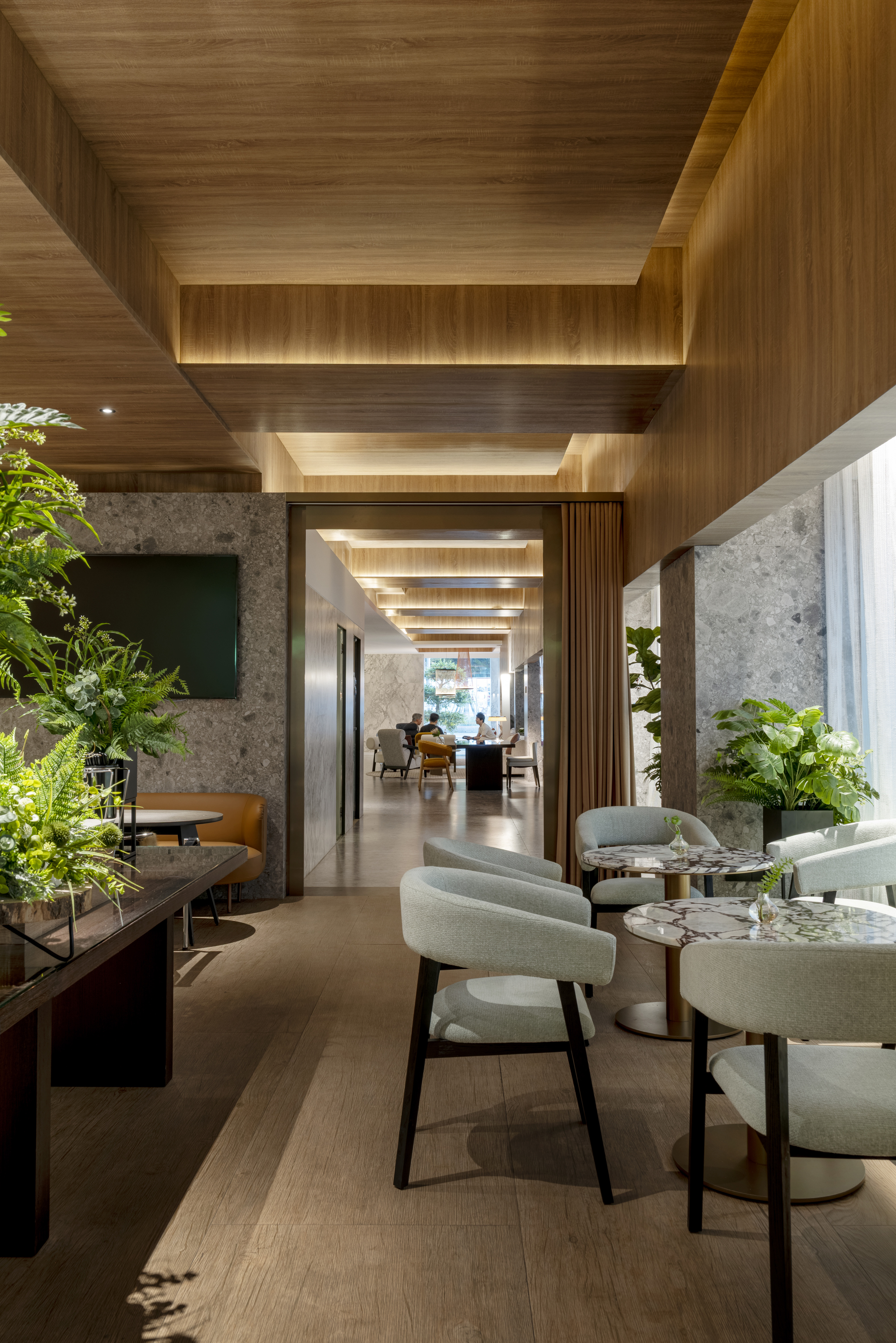
The design language is inspired by the idea of torn paper, which is reflected in the layered treatment of the ceilings and walls, giving the space a sense of movement and continuity. In the lobby, a wood ceiling adds warmth, balanced by terrazzo flooring and white marble walls to keep the overall feeling clean and modern. Around the reception and elevator areas, a collage-like approach mixes different textures and tones, creating subtle visual interest without feeling overwhelming.
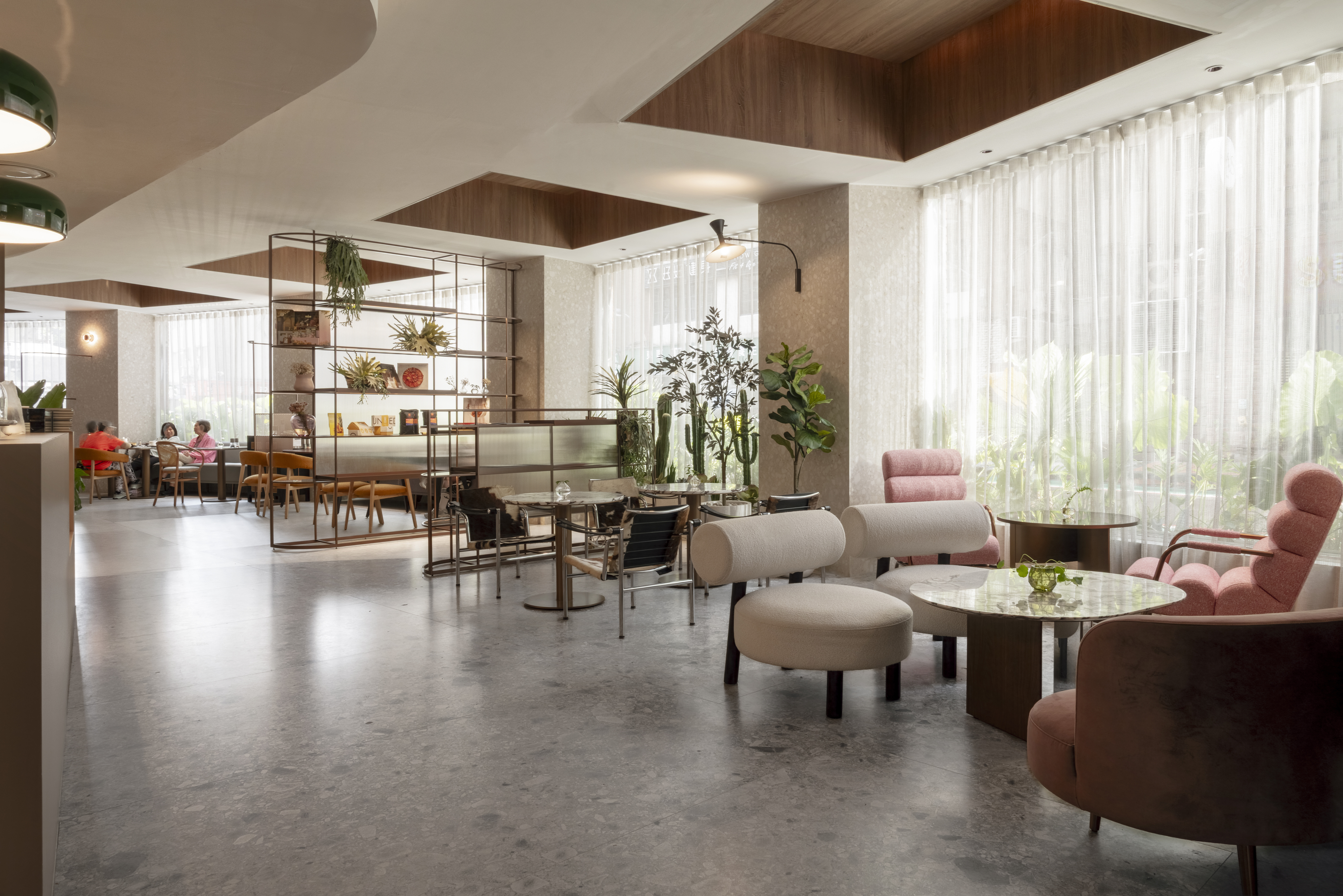
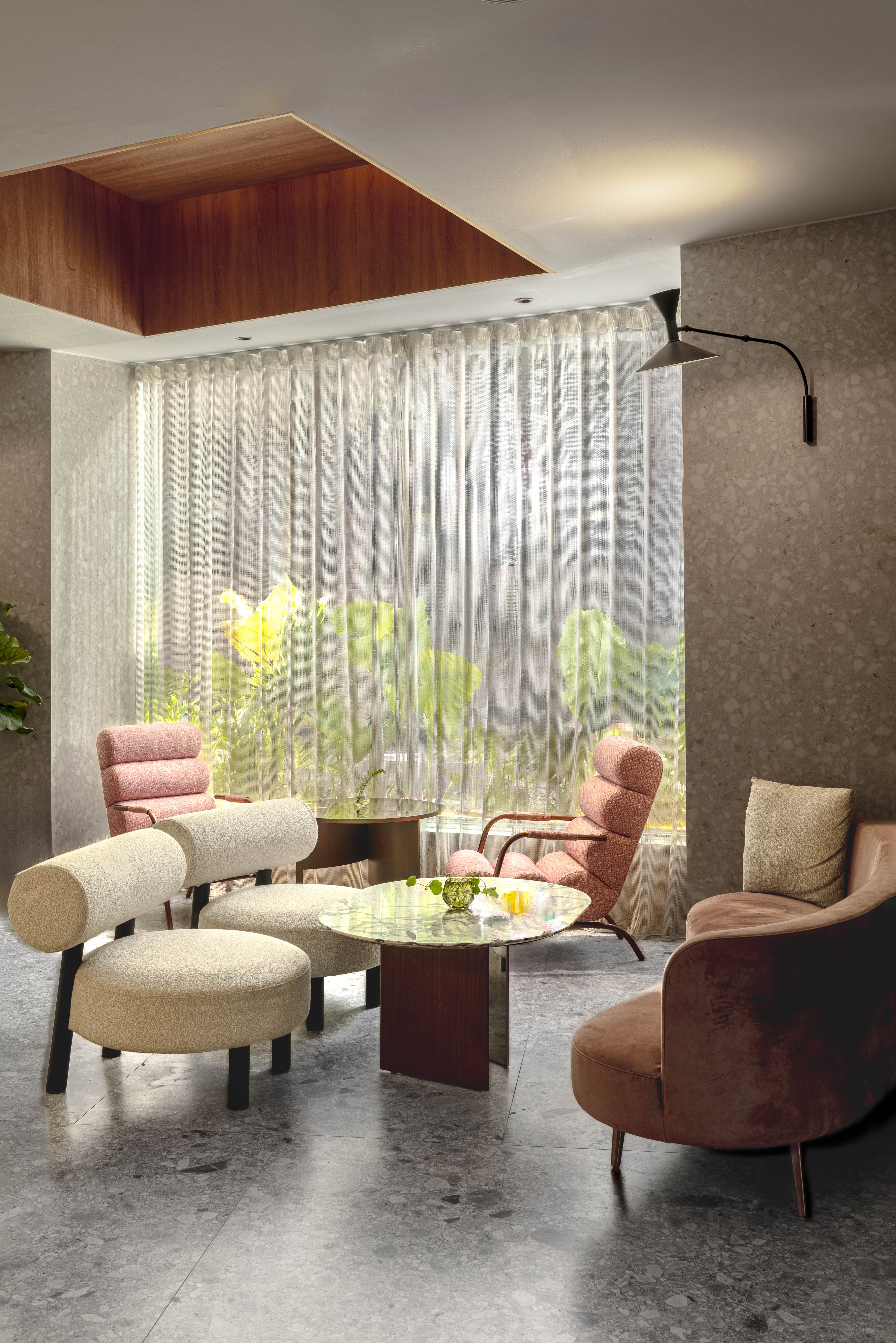
On the other hand, the café and dining areas feel lighter and more relaxed. Beige stone, metal details, white ceilings, and touches of wood come together to create an “urban resort” atmosphere. Toward the back, the seating becomes softer and more lounge-like, with low sofas that make the space feel comfortable during the day and easy to transition into a sports bar in the evening, especially with the energy from events at the nearby Taipei Dome.
The furniture responds to varying functional needs through differences in form, color, and material, with many pieces custom-designed by the lead designer, Shi-Chieh Lu, ensuring a cohesive design language throughout the space. Lighting design plays a crucial role, with wall sconces and pendant lights carefully arranged to highlight the textures of natural materials, allowing light and shadow to become essential elements in shaping the atmosphere.
To the designer Shi-Chieh Lu, the hotel is more than just a place to stay. It’s a space that encourages people to reconnect with everyday life. From the lighting to the smallest furniture details, each element reflects a thoughtful approach to living. Together, they turn the hotel into something like a gallery, where guests don’t just pass through, but experience and appreciate the space in a more meaningful way.